This Video Explains the VPN, gives You Freedom with "NO COUNTRIES RESTRICTIONS!".
If You Want, You Can Connect to Your Country's Website Even When You Are Traveling Abroad.

This Video Explains the VPN, gives You Freedom with "NO COUNTRIES RESTRICTIONS!".
If You Want, You Can Connect to Your Country's Website Even When You Are Traveling Abroad.
Probably the first thing to consider is what you mainly want a VPN for. Is it for privacy while surfing the internet? To download without looking over your shoulder? To evade the Great Firewall of China? Or just to access geo-blocked TV streaming services from abroad? ...because, Believe me when I say ...YOU NEED ONE!
Global Virtual Private Network (VPN) Market research reports meets with users expectations by covering all industrial parameters like Key Manufacturers, Top Regions, Developments, Technology, R&D, Trends, Revenue and Future industrial growth.
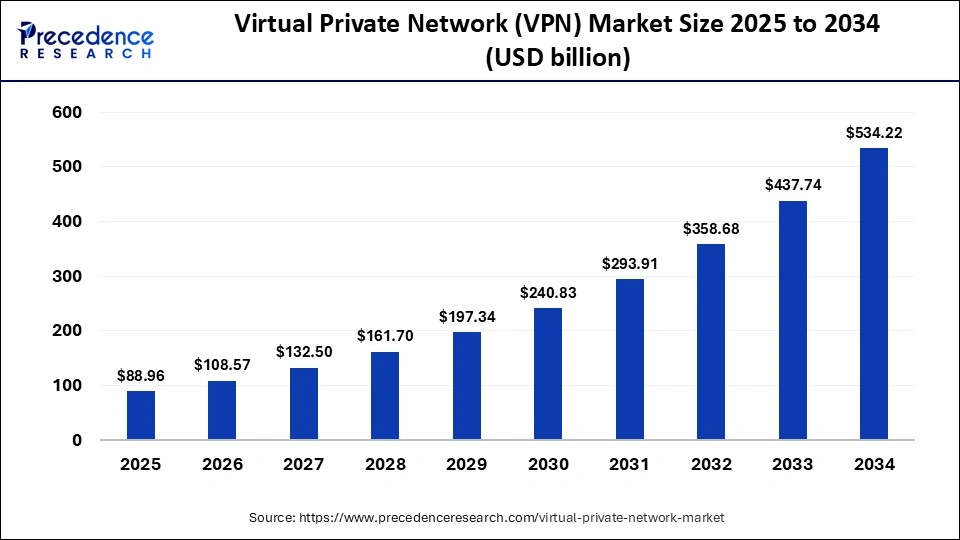
Precedence Research reveals that the global Virtual Private Network (VPN) market is valued at USD 108.57 billion in 2026 and is expected to reach
USD 534.22 billion by the end of 2034, growing at a CAGR of 22.04% between 2026 and 2034.
Geographically, this report split global into several key Regions, with sales revenue (Billion USD),
Market Share (%) and growth rate of Virtual Private Network (VPN) for these regions, from 2025 to 2033 (forecast).


Internet Service Providers (ISPs) track your entire, unencrypted browsing history, including websites visited and search queries, through their servers, aggregating this data to build detailed user profiles, which are then sold to advertisers and data brokers for targeted marketing. This process allows them to monetize user behavior without explicit, individual consent.
Because all your web traffic passes through their servers, ISPs see which sites you visit, the duration of your stay, and your search queries, even if you use private browsing mode. Data Aggregation and Profiling: ISPs compile this information to create detailed profiles of user habits, interests, and preferences. Selling to Third Parties: This compiled data, often called behavioral data or metadata, is sold to third-party data brokers and advertisers. Inferred Personal Details: By analyzing browsing patterns (e.g., visits to health or financial websites), ISPs can infer sensitive information like your financial status, health conditions, or political views.
Your web browsing patterns contain a treasure trove of data, including your health concerns, shopping habits and visits to porn sites. ISPs can find out where you bank, your political views and sexual orientation simply based on the websites you visit. The fact that you're looking at a website at all can also reveal when you're at home and when you're not.
It's much harder to prevent ISPs from tracking your data. You can choose not to use Facebook or Google's search engine, and there are lots of tools you can use to block their tracking on other parts of the web, for example EFF's Privacy Badger. Consumers are generally much more limited for choice of ISP, in some cases only having one option in a given geographical area. This means they can't choose one of the ISPs pledging to protect user data.